Friday, May 3, 2013

I is for INDRI


The Indri is a large species of Lemur found only on the secluded island of Madagascar.  The Indri evolved in the same way as every other Lemur, from smaller individuals that came to the island from Africa around 50 million years ago.  Due to the fact that there were no other primates to complete with, Lemurs soon adapted to live in a variety of habitats, producing a diverse range of different species.  Locally, the Indri is known as the 'babakoto' which means little father or ancestor of man.  As the native people believe that the Indri (with its lack of visible tail) resembles their ancestors, their is a certain taboo over consuming it, meaning that the Indri does receive some protection in parts of their native environments.


The Indri is the largest of all living Lemur species today, with some individuals reaching nearly a metre in height.  The average Indri however, tends to be between 60 and 80 cm tall with a tail of just 5cm (all other Lemurs have tails that are around the same length as their bodies).  The Indri has a dense coat of black silky fur with a varying number of white patches depending on the geographic region.  Their toes and fingers are very dexterous and are good for grasping and their long hind legs aid them in leaping up to 10 metres between vertical branches in the forst.  The yellow eyes of the Indri face forwards to help them to judge the distance before making a jump.


Like all Lemurs, the Indri is found only on the island of Madagascar in lowland jungle and tropical forests.  Lemurs are arboreal animals and they spend the majority of their lives, eating, sleeping and mating high up in the trees.  Today, the Indri is only found in small pockets of protected forest in Eastern Madagascar, due to increased levels of logging and the clearing of land for agriculture across the island.  Although actual figures are unknown there are thought to be less than 10,000 Indri left in Madagascar as the species is under severe threat in its natural environment.


The Indri is a sociable animal, living in small family units of between 2 - 6 individuals, that consist of a male and female pair with their young.  Lemurs are unique among primates as it is the females who are the dominant ones, and they get to feed first while the males defend their territory.  Indris communicate through a series of eerie wailing calls, both to unite families and also to mark their territory, that can be heard up to 2km away.  They also urinate along borders to mark out their patch.  One of the most noticeable differences between Lemurs and Monkeys is their dog-like snout which gives Lemurs an excellent sense of smell so that are able to sniff out these markings with ease and avoid confusion.


Female Indris reach sexual maturity at about 8 or 9 years of age, when they are able to have one infant every 2 or 3 years.  The babies are usually born in May or June after a gestation period of between 4 and 5 months.  The infant clings onto the belly of its mother for the first few months of life, and it then moves round onto her back.  The babies are independent at 8 months but generally remain with their mother until the age of 2 or 3.  Sadly, half of all Indri babies are thought to die before the age of 2, usually due to sickness or injury.  Although adult Indris have been known to live well into their twenties, their average life span is between 15 and 18 years.


The Indri is herbivorous, unlike many other primates that will munch on almost anything in sight.  Indris are diurnal animals and are most active in the day when they hunt for food, both in the trees and on the ground.  Females get first pickings and are often found foraging for new leaves. Young leaves make up the majority of the Indri's diet along with fruits, seeds and flowers, which are easily picked up with their nimble fingers.  Indris are known to eat a wide variety of plant matter although it is thought they predominantly eat vegetation that comes from the trees.

Living high up in the trees means the Indri is safe from many ground-dwelling predators, however, there are a number of animals that have no problem getting up to the Indri's height.  The native cat-like Fossa (see previous post re this animal) is the main predator and is an incredibly agile and primarily tree-dwelling mammal that has evolved to catch one thing, Lemurs.   Other predators of the Indri include large birds of prey such as hawks, and reptiles including snakes, all of which the Indri are thought to have different danger signals for.  One of the largest threats to Madagascar's Indri populations however is habitat loss, as hundreds of acres of natural jungle are being cleared every day.

The Indri is most closely related to more primitive primates including Bushbabies, Pottos and Lorises.  There are nearly 100 species of lemur but the Indri is the only remaining species in its genus.  Before the island was ravaged by deforestation, it is thought that a different population of Indri occupied nearly every ridge in the eastern forests.  The colour of the Indri differs between popularion, with individuals further south thought to have more patches of white, while those in the more northern areas tend to be darker.

Indri populations are now thought to be drastically low, as it can only be found in protected forest regions (where logging and land devastation still occurs).  Although it is thought there are up to 10,000 individuals left in the wild other estimates are more concerning claiming that there may be as few as 1,000 Indri remaining, but they are now protected with the listing as an ENDANGERED species.  One of the biggest worries to science is that the Indri does not do well in captivity so that captive breeding programmes to try and rehabilitate the dying populations are likely to be unsuccessful.

Kingdom = Animalia;  Phylum = Chordata;  Class = Mammalia;  Order = Primates;  Family = Indriidae
Genus = Indri;  Scientific Name = Indri indri;  Common Name = Indri;  Other Name = Babakoto


Thursday, May 2, 2013

H is for HEDGEHOG


A hedgehog is any of the spiny mammals of the sub-family Erinaceinae, which is in order Erinaceomorpha.  There are seventeen species of hedgehog in five genera, found through parts of Europe, Asia, Africa and New Zealand (by introduction).  There are no hedgehogs native to Australia, and no living species native to the Americas.  Hedgehogs share distant ancestry with shrews (order Soricidae), with gymnures possibly being the intermediate link, and have changed little over the last 15 million years. Like many of the first mammals they have adapted to a nocturnal, insectivorous way of life.  Hedgehogs' spiny protection resembles that of the unrelated rodent porcupines and monotreme echidnas.


One reason I chose the hedgehog for my 'H' is because when we were in Wanaka, *New Zealand back in 1982 we were having a stroll with a couple of English friends and we came across a hedgehog wandering across the road.  Phil picked it up to put it out of danger and friend Frank said "Oh, put that down, they are full of fleas!"  We spoke to someone about this later on who revealed that hedgehogs in New Zealand don't have fleas as apparently with the long journey from the UK to NZ years ago the fleas on the hedgehogs on board ship all died.  Whether or not this is true would have to be verified but I also think they are a fascinating animal.

The name hedgehog came into use around the year 1450, derived from the Middle English 'heyghoge', from 'heyg', 'hegge' ("hedge"), because it frequents hedgerows, and 'hoge', 'hogge' ("hog"), from its pig-like snout.  Other names include urchin, hedge-pig and furze-pig.

Hedgehogs are easily recognised by their spines, which are hollow hairs made stiff with keratin.  Their spines unlike the quills of porcupines, cannot be easily removed from the hedgehog.  However, its effectiveness depends on the number of spines, and since some of the desert hedgehogs evolved to carry less weight. they are much more likely to run away and sometimes even attack the intruder, trying to ram into the intruder with its spines, and rolling as a last resort.  This results in a different number of predators for different species:  while forest hedgehogs have relatively few, primarily birds (especially owls) and ferrets, smaller species like the long-eared hedgehog are preyed on by foxes, wolves and mongooses. (Why did I think that should be mongeese?)

The spines of the hedgehogs serve a useful purpose that enables the hedgehog to bounce!  Hedgehogs don't really have a fear of falling and they will quite happily walk off the edge of something, as they fall they curl and the muscles at the base of the spines ac as a kind of shock absorber saving the hedgehog from injury.  After a short pause the hedgehog will unball, twist and flip over and wander off as if nothing had happened.  Incidentally, hedgehogs are quite good climbers and swimmers as well.

Hedgehogs are primarily nocturnal, although, depending on the species, they may be more or leses active during the day.  The hedgehog sleeps for a large portion of the daytime either under cover of bush, grass or rock or in a hole in the ground.  Again, different species can have slightly different habits, but in general hedgehogs dig dens for shelter.  All wild hedgehogs can hibernate, although not all do; hibernation depends on temperature, species, and abundance of food.

The hedgehog's back is made up of two large muscles, which control the positioning of its quills.  There are about 5,000 to 6,500 quills on the average hedgehog, and these are durable on the outside, while being filled with air pockets on the inside.  The hedgehog uses it quills to protect itself from predators, using muscles which draw their quilled skin to cover their full body, and pulling in the parts of their bodies not covered, such as their head, feet and belly.  **This form of defense is the hedgehog's most successful, but it usually their last resort.

Hedgehogs are fairly vocal and communicate through a combination of grunts, snuffles and/or squeals, depending on the species.

Hedgehogs occasionally perform a ritual called anointing (see below).  When the animal encounters a new scent, it will lick and bite the source, then form a scented froth in its mouth and paste it on its spines with its tongue.  The specific purpose of this ritual is unknown, but some experts believe anointing camouflages the hedgehog with the new scent of the area and provides a possible poison or source of infection to predators poked by their spines.  Anointing is sometimes also called anting because of a similar behaviour in birds.


Similar to opossums, mice and moles, hedgehogs have some natural immunity against snake venom due to the protein erinacin in the animal's muscular structure (although it is only available in a small percentage and a viper bite, for example, may kill the hedgehog anyway.

Hedgehogs feed on insects, snails, frogs and toads, snakes, bird eggs, carrion, mushrooms, grass roots, berries, melons and watermelons.  Berries constitute a major part of an Afghan hedgehog's diet in early spring after hibernation.

Depending on species, the gestation period is 35-58 days and the average litter is 3-4 newborns for larger species and 5-6 for smaller ones.  As with many animals, it is not unusual for an adult male hedgehog to kill newborn males.

Hedgehogs have a relatively long lifespan for their size.  Larger species live 4-7 years in the wild (some have been recorded up to 16 years), and smaller species live 2-4 years (4-7 in captivity), compared to a mouse at 2 years and a large rat at 3-5 years.  Lack of predators and controlled diet contribute to a longer lifespan in captivity (8-10 years depending on size).

*In areas where hedgehogs have been introduced, such as New Zealand and the islands of Scotland, the hedgehog has become a pest.  In New Zealand it causes immense damage to native species including insects, snails, lizards, and ground-nesting birds, particularly shore birds.  As with many introduced animals, it lacks natural predators.  With overpopulation, it kills off more insects than initially intended and expands its diet to include things such as snails, worms the eggs of wading birds.

Hedgehogs suffer many diseases common to humans and these include cancer, fatty liver disease and cardiovascular disease.  Fatty liver disease is believed by many to be caused by bad diet as hedgehogs will eagerly eat foods that are high in fat and sugar.  Having a metabolism adapted for low-fat. protein-rich insects, this leads to common problems of obesity.  Fatty liver disease is one sign and heart disease another.

I realise this really is a very, very long post but from it, for what it's worth,  you should have learned all you wanted to know, or didn't want to know, about the hedgehog.

P.S.  **I was telling Phil that the hedgehog was my "H" post and he was reading some of it and said that he had encountered hundreds of hedgehogs back in the UK and they nearly always rolled into a ball if you touched them.  He also said it was a known fact that when the cows lay down in the fields at night hedgehogs would come and suckle the cows.  Unbelievable but true.


Wednesday, May 1, 2013

G is for GLIDER

G is for MAHOGANY GLIDER (Petaurus gracilis) Originally discovered in 1883.


The mahogany glider is nocturnal and was thought to be extinct for over 100 years until it was rediscovered in 1989; however throughout that time it had been confused with other gliders and possums.  Nearly a month after the discovery in 1989 their habitat was cleared for banana plantations and another population wasn't found until 1991.  Primary predators of the mahogany glider include various owls and the scrub python.  This species of glider is endangered and is located in northern Queensland.  Humans are the primary reason for destroying the habitat of the mahogany glider.  It is notable that this species is silent.


Most mahogany gliders are found below 20m, however some have been found at altitudes of 120m. A variety of habitats have also been recorded ranging from swamps, to eucalypt woodlands and coastal ridges.  Nests can be found in hollow trees.  The adult mahogany gliders will nest alone or in pairs.


Average mahogany gliders weight about 320g; males tend to weigh more than females.  The average length of this species is 600mm, including head and tail.  This animal has a mahogany hue (hence the name of mahogany glider), with a lighter brown underbelly and a black stripe extending from the head to the end of the tail (see below).  Large eyes, big hands/feet with claws, naked ears, and a pointy nose are present on the mahogany glider.  The hands and feet are used to grab the limbs of trees.  There is a membrane that connects each wrist to its corresponding heal and is used for gliding.  They are able to glide for distances up to 140 metres.


Nectar, sap, honeydew and kino are among the preferred diet of the mahogany glider.  Kino is a gum that the animal gets when it slashes the bark on a bloodwood tree, blue gum tree, or melaleuca trees.  Tree blossoms and insects are also eaten.  Pollen that gets on the fur of the glider while it feeds is dispersed as the animal glides.  When hunting for food mahogany gliders will go alone to avoid the attention of predators.

Female mahogany gliders raise the young in up to twelve nests that are rotated seasonally.  Breeding occurs at night, but little else is known about the mating habits of this animal.  The average life span of this species is six years.

Tuesday, April 30, 2013

ANOTHER OUTING - THE SECOND IN 5 DAYS

I seldom go out but now its been twice in five days.  This time we met our young friend Richard for lunch at the old Rockingham Hotel.  You can see it here in the background to the right of the large pine tree.


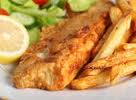
It is a real old style Aussie pub and unfortunately, although they have an excellent menu, it is no longer well patronised.  Perhaps it just doesn't attract the moderns who seem to want different exotic foods.  We three all had beer battered fish with well cooked chips and a nice normal salad of lettuce, tomato, cucumber and spinach leaves.  There was a nice Italian salad dressing and tartare sauce so what more could one want?  It was a truly enjoyable meal.


I guess we are just old fashioned and enjoy old fashioned food.  We know we really shouldn't eat fish and chips but as I've said before, we are all entitled to 'do the wrong thing' occasionally and I even had a lemon squash which I am sure was full of sugar!!  I remember the old saying "A little bit of what you fancy does you good".


After lunch we walked (me with my trusty walking frame) to the shops on the 'front' and found a nice little coffee shop and Richard shouted us to a coffee each and we sat and chatted a little longer.


Tonight we will be very good and have a bowl of the delicious tomato, lentil and vegetable soup we made yesterday.  This is not the soup we made but looks very much the same.  A little less curry powder next time perhaps!!


This is the grain terminal seen from Rockingham beach.  It's a great pity such a beautiful area has to have industry so close by but I guess it's called progress so we must be thankful to still have lots of lovely areas left to us and hope they will remain for future generations.

Perhaps it is old age but although I love these outings it always takes me a couple of hours with my feet up when I reach home to recuperate.  Now the weather is cooling down I am determined to get out and about more because I feel we need to do so even if we do both feel rather weary afterwards.  The aches and pains are still there and always will be so why just suffer them at home when there are so many nice places within 30-40 minutes drive from home to visit to take my mind off them for a while.

F is for FOSSA


The fossa (Cryptoprocta ferox) is a cat-like, carnivorous mammal that is endemic to Madasgascar.  It is a member of the Eupleridae, a family of carnivorans closely related to the mongoose family (Herpestidae).  Its classification has been controversial because its physical traits resemble those of cats, yet other traits suggest a close relationship with viverrids (most civets and their relatives).  Its classification, along with that of the other Malagasy carnivores. influenced hypotheses about how many times mammalian carnivores are most closely related to each other (forming a clade, recognised as the family Eupleridae).  Carnivores are how thought to have colonised the island once around 18 to 20 million years ago.


The fossa is the largest mammalian carnivore on the island of Madagascar and has been compared to a small cougar.  Adults have a head-body length of 70-80 cms (28-31 in) and weigh between 5.5-6.8 kg (12-19 lb), with males larger than the females.  It has semi-retractable claws and flexible ankles that allow it to climb up and down trees head-first, and also support jumping from tree to tree.  The fossa is unique within its family for the shape of its genitalia, which share traits with those of cats and hyenas.


The species is widespread, although population densities are usually low.  It is found solely in forested habitats, and actively hunts both by day and night.  Over 50% of its diet consists of lemurs, the endemic primates found on the island; tenrecs, rodents, lizards, birds and other animals are also documented as prey.  Mating usually occurs in trees on horizontal limbs and can last for several hours.  Litters range from one to six pups, which are born blind and toothless (altricial).  Infants wean after 4-5 months and are independent after a year.  Sexual maturity occurs around three to four years of age, and life expectancy in captivity is 20 years.  The fossa is listed as "vulnerable" by the International Union for Conservation of Nature (IUCN).  It is generally feared by the Malagasy people and is often protected by their taboo, known as 'fady'.  The greatest threat to the species is habitat destruction.


The above shows the distribution of the fossa on the island od Madagascar.

An extinct relative of the fossa was described in 1902 from subfossil remains and recognised as a separate species, Cryptoprocta spelea, in 1935.  This species was larger than the living fossa (with a body mass estimated as twice as great), but otherwise similar.  Across Madagascar people distinguish two kinds of fossa - a large 'fosa mainty' (black fossa) and the 'fosa mena (reddish fossa) - and a white form has been reported in the southwest of the island.  It is unclear whether this is purely folklore or individual variation - related to sex, age or instances of melanism and leucism - or whether there is indeed more than one species of living fossa.

Melanism = the condition of having a high amount of dark or black pigment granules in the skin, hair, eyes etc.
Leucism = In zoology, whiteness resulting from lack of colouring; albinism, partial or complete; a technical term correlated with melanism and erythrism.

I was disappointed to learn that the lemur was one of the creatures that the fossa hunts as I am rather fond of lemurs but I guess it's all part of nature in the wild which one has to accept.

Monday, April 29, 2013

E is for ECHIDNA


Echidnas (pron. 'ikidna'), sometimes known as spiny anteaters, belong to the family Tachyglossidae in the monotreme order of egg-laying mammals.  The four extant species, together with the platypus, are the only surviving members of that order and are the only extant mammals that lay eggs.  Although their diet consists largely of ants and termites, they are no more closely related to the true anteaters of the Americas than to any other placental mammal.  They live in AUSTRALIA and NEW GUINEA.  The echidna is named after a monster in ancient Greek mythology.


Echidnas are small solitary mammals, covered with coarse hair and spines (see above picture).  Superficially, they resemble the anteaters of South America and other spiny mammals such as hedgehogs and porcupines.  They have elongated and slender snouts which function as both mouth and nose.  Like the platypus, they are equipped with electrosensors, but while the platypus has 40,000 electroreceptors on its bill, the long-billed echidna has only 2,000, and the short-billled echidna, which lives in a drier environment has no more than 400 located at the tip of the snout.


The western long-beaked echidna is pictured above.

They have very short, strong limbs with large claws, and are powerful diggers.  Echidnas have tiny mouths and toothless jaws.  The echidna feeds by tearing open soft logs, anthills and the like, and using its long, sticky tongue, which protrudes from its snout, to collect prey.  The short-beaked echidna's diet consists largely of ants and termites, while the Zaglossus species typically eats worms and insect larvae.
Long-beaked echidnas have sharp, tiny spines on their tongues that help capture their prey.

Echidnas and the platypus are the only egg-laying mammals, known as monotremes.  The female lays a single soft-shelled, leathery egg 22 days after mating and deposits it directly into her pouch.  Hatching takes place after 10 days; the young echidna then sucks milk from the pores of the two milk patches (monotremes have no nipples) and remains in the pouch for 45 to 55 days, at which time it develops spines.  The mother digs a nursery burrow and deposits the young, returning every five days to suckle it until it is weaned at seven months.


Three cute little babies complete with spines.  I really love this picture.

Neocortex makes up half the echidna's brain, compared to one-third of a human brain.  Due to their low metabolism and accompanying stress resistance, echidnas are long-lived for their size; the longest recorded lifespan for a captive echidna is 50 years, with anecdotal accounts of wild individuals reaching 45 years.  Contrary to previous research, the echidna does enter REM sleep, but only when the ambient temperature is around 25C (77F).  At temperatures of 21C (59F) and 28C (82F), REM sleep is suppressed.

Molecular clock and fossil dating suggest echidnas split from platypuses 112.5 million years ago.  Echidnas evolved from a water-foraging ancestor which returned to living completely on the land, even though this put them in competition with marsupials.  Consequently, oviparous reproduction in monotremes is suggested to confer advantages over marsupials, a view consistent with present ecological partitioning between monotremes and marsupials.

If you'd like to learn about their reproductive habits I'd suggest you look it up as it is rather a complicated procedure.


Sunday, April 28, 2013

D is for DIBATAG (or dibitag)

The dibatag (Ammodorcas clarkei), also known as Clarke's gazelle, is native to Somalia and Ethiopa.  Its range is significantly smaller than it once was and, in many areas, populations are fragmented.  In the region of Ogaden, where it was once abundant, the northern populations have dwindled due to human civilisations taking over.  In southern Ogaden, it is still present in presentable numbers, most likely due to the natural vegetation and habitat required to sustain it.  It prefers a habitat within arid and sandy grasslands.

The dibatag is actually an antelope, although it resembles a gazelle.  Its tail is striped, and will rise if it feels threatened.  This action grants it the local Somalia name meaning "erect tail".  Males can weigh an average of up to 77 pounds, while females weigh less at 63 pounds.


Many things, including war in its Somalia range, hunting, drought, and the habitat loss that these factors cause, threaten the dibatag.  There are currently no protected areas within its range, and no captive breeding populations.  Despite this, conservationists have proposed efforts to save this species, with Ogaden being the only viable location for these efforts to prove successful.  The dibatag appears n the IUCN Red List wit a conservation status of "Vulnerable".


We can only hope that progress will be made by conservationists to save this species.  It is so sad that such a beautiful animal should face extinction.  There are so many creatures that are threatened these days very often as a result of the actions of mankind.