Tuesday, February 11, 2014

TELLING IT ON TUESAY - 1946-1947 (Part 6)

So far I have covered my birth, adoption, our move from the farm to Perth and the different places where we lived and also the schools I attended.  I have covered the war years 1939-1945 and what our family did during those years, plus rationing, the bombing of Australia and cessation of hostilities.  In this post I have only included two years, 1946-47, as a lot took place during those years.

1946...Unfortunately I do not remember exactly when dad bought the corner shop in Swanbourne but I feel it was possibly during 1945 as I do remember living there when I was 14.  I had left Perth College at the end of 1945 and was now attending City Commercial College which I enjoyed immensely. At the end of the year I sat for and passed my Commercial Junior examination and the certificate showed I had passed in 6 subjects.  I was also awarded a gold badge with CCC in its centre for being one of the top students of 1946.  I was very proud of that achievement.  I could have applied for a job immediately but dad said I was much too young as I was still only 14 so back I went to the college in 1947.  People were allowed to commence work when they were 14 back then.  This is a photo, taken by a street photographer, of me and my two best friends at City Commercial...Joan Uren and Shirley Manners.  Don't the three of us look so serious?  I was 14 then and June and Shirley were both 15.  I actually met up with Joan many years later and we had a long chat but I've never seen Shirley since 1947.  Shirley and I had both been at Perth College together.  I notice we all three are wearing overcoats.  I doubt many people in Perth these days even own an overcoat.


1947...It had been quite hard work running the shop as rationing was still in force and there were many shortages so shopkeepers had to try and be fair and share provisions among their customers. Dad used to deliver the grocery orders and mum mainly ran the shop and the house as well.  I remember she did have a lady come in and do her washing and ironing which made her work load somewhat lighter.  I think finally they had both had enough so decided to sell the shop.  They then of course had to find a place to live and houses to rent were not easy to find in those post-war days. Fortunately dad was able to find a man who wanted to buy the shop and an arrangement was made that we could take over the house he was renting in North Perth (524 Fitzgerald Street).  It was a brick and iron house with 3 bedrooms and a bathroom plus a front and side verandah, and mum made into a very comfortable home for us.  We lived there from May, 1947 until 1952 when mum and dad at last built a home of their own in Joondanna (then known as Joondanna Heights) ... more about that later.


At the same time that we moved into this house I began my first job as a stenographer.  I had mentioned that dad hadn't wanted me to start work while I was still only 14 so I subsequently spent the first term of 1947 still at City Commercial College.  I mainly improved my shorthand speed and was actually offered a position at the college as a junior shorthand teacher.  I was only 15 and the thought of teaching people my own age, or possibly even older, terrified me so I declined the offer.  I had always been a rather shy child and although I probably would have done quite well I was just too shy to even consider it.  You often wonder if important decisions one makes sometimes change the direction one's life takes.

At the end of April, 1947 the Principal called me into his office to tell me a very good job was available and he thought I would fill the position very well if dad would allow be to be interviewed.  He telephoned dad and said he felt it was a good opportunity for me so dad weakened and agreed.  I attended the interview at the Royal Automobile Club at 228 Adelaide Terrace in Perth and got the job.  I was actually employed by Club Motor Insurance which was situated at the RAC.  It was called Club Motor as it was situated in and autonomous to the Royal Automobile Club and only handled motor vehicle insurance.  I started at the grand salary of £2.5.0d a week which was very good as I had friends who were only earning 18/6d a week.  Obviously being rather good at shorthand made a big difference to my salary.

It was quite fun moving on the weekend and beginning my new job on the Monday.  The bus route ran right past the house and on the journey home I had to remember where to get off the bus as I didn't know the area very well.  Made it home OK and arrived home to tell mum all about this great job I had.  I just knew I was really going to enjoy it.

I'd only been working there for 2 weeks when there was a huge upheaval.  The RAC itself had decided to begin its own insurance company (which still exists today) so Club Motor Insurance was to be booted out.  The manager talked to the few of us about whether we would like to move with him or stay where were and at least two of us decided we would go with him.  His name was Norman Stehn and he was a great boss.  We moved to what had been a little shop at 48 James Street in Perth.  The office was downstairs and Mr Stehn's office was upstairs with a little closed in verandah on the side as our lunch room.  If I remember rightly the toilet was outside behind the shop.  This is the staff in 1947-48, from L to R: June Wilson, Peg Lonergan, the manager Mr Norman P. Stehn, Val Edmunds and me.  You can see the words Club Motor Insurance on the window of the shop.


Club Motor Insurance was an insurance company comprising a large number of companies that all had shares in the company.  In those days the only insurance undertaken by us was comprehensive motor vehicle insurance and third party vehicle insurance.  This was why this company had originally been part of the RAC.  All Third Party insurance fell due on 30th June each year so every June was a particularly busy time and we girls would work overtime for several weeks before and after 30th June. I think we were paid five shillings tea money is we worked later than 6pm which was great as we usually waited until we got home to have a dinner that our mums had ready for us.  It cost less than two pounds a year for Third Party insurance depending on whether it was a private or commercial vehicle.  People had to have Third Party insurance before they could licence their vehicle or renew their vehicle licence.  Only a few doors down James Street was the Police Traffic Office where car licences were renewed so it was convenient for car owners to pop into our office first and then walk the few yards to the Traffic Office.  It was to that Traffic Office in 1954 that I went for my driving test which thankfully I passed without mishap.  Don't tell anyone but I'd actually been driving since about 1949 but not a great deal.  Roads were far safer in those days with lower speed limits.

The State Government decided to incorporate Third Party insurance into the vehicle licences and with so much of our business being Third Party the insurance companies involved in Club Motor decided to disband it altogether.  Our boss then decided he would set out on his own and become an insurance assessor.  We all decided we would stay with him and he hired one more lady (Greta Young) and also two gentlemen, a Sid Richardson who was a motor mechanic by trade, and Jock McKenzie who had been a policeman.  Greta did the firm's books and Sid and Jock were assessors as well as the boss of course.  The business prospered and I stayed with them until I flew to Melbourne in October, 1950 to work for the Department of Civil Aviation (more about that later).

It was in 1947 that I discovered yachting and also went out with a boy.  We were once again holidaying down at Mandurah at Easter when this family arrived bringing with them a sharpie to sail on the Mandurah Estuary.  The ANA Yacht Club in Perth had thought that perhaps an annual yachting carnival could be held at Mandurah each year so the Arnolds had been asked to try out the water to see if it would be suitable for such an event.  Their son Gary owned the boat and with them also came his crew John Webster and Ron Felton.  They too were staying at Mandurah House.  One day Gary asked me if I would like to sail with them.  Once again, not only my shyness but my doubts about sailing made me say "no thank you"  Although I could swim very well I wasn't too sure about this slim looking boat with the huge sail.  Mum then said she would like to go which of course made me think if she would go then it should be OK so I said "yes".  A friend of mine, Shirley Cooksley, had joined us on this holiday so Shirley and I went for a sail in "Columbine", Gary's yacht.  These boats were 19'6" in length with a cockpit and were not very wide.  As with swimming, once I tried yachting I loved it and was in that boat every moment I could be.  A couple of years later I bought myself a little 12ft VeeJay which I mainly sailed on the Swan River although one year we did take it with us down to Mandurah. (that is yet another story).


This is Shirley and me in the yacht at the Mandurah jetty with Gary, John and Ron waiting to go sailing.  You can see by the people on the shore just how busy Mandurah used to be during the Easter holidays.  This was a beautiful stretch of water to sail on and the ANA Yacht Club held annual regattas in Mandurah at Easter for several years and they were very popular.

At this time were were still living at the shop in Swanbourne so of course had a telephone (which we'd not had in our homes prior to that).  Gary lived in Mount Lawley which was many miles away from us so he would 'phone me at night.  I can remember dad coming into the shop and saying "Are you still on that 'phone?" which is probably what dads everywhere have been saying to daughters over the years.  As very few young people owned cars in those days if one wanted to go out with a boy who lived some distance away it was normal to meet him at the venue where you were going to go, such as a picture theatre or similar and he would afterwards see you safely on to your bus or tram.  The drinking age was then 21 so no thoughts of going to an hotel, not that many of us could have afforded to do so anyway and drinking was something young people didn't really bother with unless it was a very special occasion.  Gary was an apprentice in the firm owned by his father's family and apprentice wages then were very low.  I think Gary at 17 was earning about £2/week and quite possibly even less than I was earning as a stenographer. I do remember going with Gary to see "Pirates of Penzance" as a stage show and we thoroughly enjoyed.  I think John Webster and his girlfriend came along as well.

Once our family moved to North Perth we were only within walking distance of where Gary lived and he would pop down most nights for a couple of hours and for a 15-year-old girl this romance became a little too serious.  Later that year I decided to tell him I couldn't see him any more.  It was strange 'cos there were evenings I would be out with friends and Gary would pop down and visit my mum.  I think she felt a little sorry for him but I know she understood when I told her he was just too serious for me.

I do hope I've not made this section too long but it's difficult to know just where to stop.  I am cutting it down into just a couple of years at a time but if I'm putting too much into any section please do be kind and tell me.  Next week it will be when I am 16 and perhaps 17 and hopefully will be shorter.

Monday, February 10, 2014

AND THEN SHE WENT AND STUFFED IT UP

I just knew (and said so) that I was tempting fate when so many things went 'right' last week!!!  Happy as Larry was I until Saturday night when I did something really terribly, awfully, ridiculously stupid.  I left the hot tap running into the kitchen sink and we had a FLOOD.  I can honestly say I've not done anything like this before which I guess is in my favour and we are covered by insurance as well but I've done so much damage to our kitchen sink cupboards.   This picture is not of our kitchen (although similar) but it rather looked like this when Phil walked into the kitchen after the tap had been running for some time:


Phil and I worked for some time with two mops without getting very far and then I decided to fetch towels from the linen cupboard and that certainly made the hard work a little easier.  Line full of freshly laundered towels just in thanks to Phil.  We both suffered yesterday, me with my back and poor Phil with his neck which had been poorly already.  He is OK today and I'm walking a tad better but it's still a painful reminder of what I've done to our poor kitchen.

We had the kitchen renovated back in about 1982 and although it's nothing flash it suited us.  Now the water has determined that some type of renovation is going to be needed again.  The water has warped the doors and also partly lifted the formica (or whatever that brown stuff is) up on one side of the bench top and the bottom of the cupboard is warped and doors won't close and the bottom drawer won't open at all but fortunately nothing very important in there except my dishcloths really.

Phil rang and reported this mishap to our insurance company and we are covered and an assessor will call sometime within the next week.   Our insurance company are extremely efficient so we are hoping it won't be too long before we know if we are going to be fully covered for the damage.  The lady on the phone even said they would check the floors in case of damage which I'd not thought of. Our floors are jarrah so should be OK but I guess it's worth making sure although I don't really want the vinyl pulled up. Guess we'll leave that decision to the assessor when he is here.  We are now in the hands of the insurance company.

The one good thing that has come out of this is how patient my husband is if ever I do anything silly. Not one cross word about it even though I feel I deserved at least one.  He said to me this morning "When I am perfect then I will criticise!"  What more can a woman ask for?  Can't think of anything.

Saturday, February 8, 2014

JEWEL BEETLE and JOSEPH'S COAT MOTH

I found two very pretty creatures when searching for "J" insects so decided to include them both.

Class: Insecta;  Order: Coleoptera;  Family: Buprestidae;  Genus: Temognatha;  Species: alternata

The JEWEL BEETLE is a striking beetle with bright yellow and red bands on the greenish blue wing covers.  The head and thorax are dark blue/green.  The wing covers are lined with rows of fine pits along the length giving it a furrowed appearance.  Its normal size is 2.6cm long.


There are are eighty species of Temognatha found in Australia and New Guinea.  This species is found in northern Queensland and this particular one was in Cooktown.


Class: Insecta;  Order:  Lepidoptera;  Family: Noctuidae;  Genus: Agarista;  Species agricola

The JOSEPH'S COAT MOTH is beautifully marked.  The forewings are black with yellow and pale blue markings and the hindwings are black with pale blue and bright red bands.  Females have a broad patch of white on the front part of the body and base of forewings.


The wingspan of the male is 5 cm and the female 7 cm.  They feed on cultivated grape crops as well as on native grapes.


The caterpillars are banded black and white with two orange bands.  The orange bands are after the third black band from each end.  The caterpillars are lightly covered with long hairs with club-shaped tips.


This moth is found in the Northern Territory, Queensland, New South Wales and Victoria.

JAPANESE BOBTAIL (Cat)

Did you think I'd given up on the cats, dog and insects?  Thought I'd give them a rest for a while but they are always there as a good stand-by when one is needed.

The Japanese Bobtail is a breed of domestic cat with an unusual 'bobbed' tail more closely resembling the tail of a rabbit than that of other cats.  The variety is native to Japan and Southeast Asia, though it is now found throughout the world.  The breed has been known in Japan for centuries and it frequently appears in traditional folklore and art.


As in most other breeds, Japanese Bobtails may have almost any colour (or colours, arranged in any number of patterns).  Predominantly-white calicoes are especially favoured by the Japanese and other cat fanciers and strongly represented in folklore, though other colorations are also accepted by breed standards.

One theory on short-tailed cats in Japan indicates that they arrived from the Asian continent at least 1,000 years ago.  In 1602,  Japanese authorities decreed that all cats should be set free to help deal with rodents threatening the silk worm industry.  At that time, buying or selling cats was illegal, and from then on bobtailed cats lived on farms and in the streets.  Japanese Bobtails thus became the "street cats' of Japan.

Around 1701, in "Kaempfers's Japan", the first book written by a Westerner about the flora, fauna and landscape of Japan, German doctor Englebert Kaempfer wrote "there is only one breed of cat that is kept.  It has large patches of yellow, black and white fur; it has a short tail that looks like it has been bent and broken.  It has no mind to hunt for rats and mice but just wants to be carried and stroked by women."  To me the one below looks as though it could be someone's pampered pet:


In 1968, Elizabeth Freret is the first known person to have imported the Japanese Bobtail in to the Western Hemisphere from Japan.  It was accepted for Championship status in the Cat Fancier's Association in 1976.  Recognition for the long hair variety followed in 1993.  As of 2013, there are a number of Japanese Bobtail breeders, most of whom are based in North American with a few in Europe and at least one in Japan, yet the breed remains rare.


The short tail is a cat body-type mutation caused by the expression of a recessive gene.  Generally, all kittens born to two botail parents will have bobtails as well, but progeny of only one bobtailed parent are much less likely to possess the trait.  Unlike the dominant Manx gene the Bobtail gene is not associated with skeletal disorders.  The Bobtail gene only affects the number of tail vertebrae present.


 Recent scientific studies on cat genetics led by researchers has indicated that the Japanese Bobtail breed ranks amongst one of the most genetically diverse of pedigree breeds.  Compared with other breeds,  Japanese Bobtails tend to have smaller litters with the kittens being proportionally larger at birth and developing at a faster rate.  Kitten mortality rares are reported to be comparatively low.


Generally speaking, members of this breed are active, intelligent cats, with a strongly human-oriented nature, are easier to train to perform tricks than most breeds. and are more likely to enjoy learning human-mediated activities like walking in a harness and leash, and playing fetch.  They are very attentive, alert felines that notice a lot.  Considered an unusually "talkative" breed, they often interact vocally with people.  Their soft voices are capable of nearly a whole scale of tones, leading to folk believing that they can sing.  Many owners also report a fondness of water, although this is not considered a breed-specific trait.
(Strangely enough, although our Precious is just a long-haired 'moggy' she will sit and carry on a conversation and also has quite a large range of different notes in her voice and at times almost seems to yodel.)


It mentions also that Sue Grafton in her book "W is for Wasted" speaks of she and her landlord acquiring a Japanese Bobtail cat named Ed which scratches a would-be killer and saves the life of the main character Kinsey Millhone.  I well remember reading that part of the story and was quite amazed and even amused by it. 

My thanks again to Wikipedia for the information about this delightful cat breed and to the 'free pics' I was able to find which always helps make the story complete.


Friday, February 7, 2014

FUNNIES ON FRIDAY

Need cheering up or just feel like a laugh, then hope these may do it for you.  They all arrived in an email I received today.  The first one is a good warning to everyone who so far has refrained from finding out the vagaries of Facebook, the rest speak for themselves.  You may have seen them before but they still make me smile so hope they do you too.


Thursday, February 6, 2014

THOUGHTS ON THURSDAY

Each Thursday I try and fine the 'right' things that have happened that day or during the week and this week that have been several of them.

On Saturday night we went to Kelmscott (to our daughter and son-in-law's home) for a sausage sizzle as the day before it had been their eldest daughter's birthday (she is our eldest granddaughter).  A very pleasant evening and quite cool as well which was a blessing and I always so enjoy it when the family get together.

On Monday we had a visit from my late friend Judy's youngest son Richard.  It was a complete surprise and it is always great to see him.  We enjoyed  Subways for lunch and I've promised to supply him with copies of his family tree which I researched for his mum some years back. This is Richard chatting with Phil down at Rockingham last year:


Today I had a telephone call from my daughter to tell me her doctor says she must not return to work until 24th February which I completely agree with.  I've been worried that, although the knee is doing really well, she could suffer permanent nerve damage in her leg and now feel 'right' about her doctor looking after her so well.  K now has to rest and take it easy as much as possible while still doing the appropriate exercises she has been shown.  She will be doing some work projects at home so won't be completely bored.  Pity I don't live just around the corner so I could pop in for a cuppa but thinking about that perhaps not.  I'd probably drive the poor woman potty.

Also today a telephone call from my nephew Steve who I met for the first time in January, 2012.  He now has his own electrical business and we've been having him do some work for us at our old house and now it is all safe and up to date which is nice to know and very 'right' indeed.  I'd rather pay a family member I can trust than a complete stranger to do the work.   Steve too is into genealogy and we shared some more family information.  This is Steve in his army uniform a few years ago.  The black and white photo I think was taken when he was in the army reserves.  He did two tours of Afghanistan:


The last and final 'right' is OUR LIGHT POLE IS UP.  I call it ours as it is right on our verge so now all I need to do is to wait until it is dark and see if it is working OK, although it could take a day or two before it is connected.  It will be so 'right' to have our end of the street with good lighting once again as for years it has been somewhat below standard.

Tuesday, February 4, 2014

TELLING IT ON TUESDAY....1940-1945 (Part 5)

MY DAD.  As mentioned, in 1940 we were living in Clive Street, West Perth in the home of Mrs Laird when something quite unusual occurred and we never really knew how dad's address in Western Australia was known to the powers that be.  My dad had been decorated by King George V when he received the MBE (Member of the British Empire) medal for work he had done during World War 1.  At that time he was Chief Clerk of the Sugar Commission in London (that is where he met my mum) and from what mum told me dad used to meet trains in the underground and receive or sometimes hand over envelopes or packages, containing we knew not what.  It was something he himself had never spoken about. (Mum went to Buckingham Palace with dad when he received the medal from the king and from the way she spoke about the occasion, I think she was very proud of her husband).

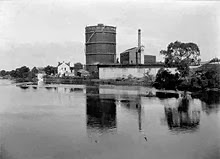
Anyway to cut a long story short, these two gentleman arrived at our front door asking for dad and they proceeded to tell him he was wanted as more or less part of the Home Guard.  It would be his job to guard the Gas Works in East Perth of a night to keep it safe.  This is the gasometer viewed from the Swan River in 1933.   Remember, I was only 8 when all this happened so my memories may be a little sketchy.


Apparently he was given a revolver with instructions on exactly what he was supposed to do while there, such as saying "Halt.  Who goes there?" should he hear anything unusual.   I have no idea how long this guard duty lasted but I do know it was difficult for dad to keep up with his Rawleighs business so mum would help by lugging the large case of samples to regular customers (she didn't drive) when he was asleep, having been up all night.  I really don't think this went on for very long but dad did his duty while he had to.  Mum always said she never knew what dad would do if anyone challenged him as she couldn't imagine him shooting anyone.  After this we moved to North Perth and dad got on with his job of selling Rawleighs products and doing an excellent job of it.  He was one year top salesman for the whole of Australia and received a very nice smoking stand complete with ashtray which I remember him using in the lounge room.  He was also top salesman for Western Australia a couple of times.

He had tried to enlist during WW1 but had hearing problems even then and I believe his job in the Sugar Commission was classified as a 'reserved occupation' which was considered important enough to a country that those having such an occupation are exempt from military service.  Dad would have been 29 when WW1 began.  I believe poor dad tried all services including the merchant marines but he was not considered fit enough and I doubt he would have been released from his job, as sugar was imperative to the war effort as it is used in so many things and of course ships carrying it to the UK were being sunk by the enemy.

When dad began as a Rawleighs dealer he realised he needed a car so he looked around to see what was available.  He wanted something he could put his large sample case in or on; a car that would be comfortable for the 3 of us to travel in and one that would be economical.  He finally chose a Fiat 8 tourer which was a 2 door car with a little luggage rack on the back.  It is said this little Fiat would do 60 miles to the gallon and had a top speed of 60mph.  That may just have been sales talk!  We were so proud of our new car.  These cars didn't have windows but 'side curtains' which one could take off the car (as shown here) and note the doors also open the 'other way' to today's cars.  This is me standing by the car when we were up in King's Park one day.  I would probably have been about 8 at this time:


 MY BROTHER.  My half-brother Len had joined the Royal Australian Air Force in 1939 before hosilities began and he was being trained as a photographer.  He was stationed at Pearce Aerodrome in Western Australia and early on in the war we used to see him quite frequently.  Len and Jean were married on 27th January, 1940 in St. Andrew's Presbyterian Church in Perth.  Jean didn't wear a formal wedding dress as it was wartime but looked very beautiful in the outfit she chose. (I also have a photo of them on their wedding day and once again I wish I could share it with you).  I remember mum had made a 'lucky' horseshoe of gathered white satin ribbon decorated with orange blossom and I gave this to Jean as she was about to enter the church.  I had just turned 8 and felt so very proud of my brother and my new sister-in-law.  They had a very nice wedding reception afterwards although there had been a mix up with the wedding cake.  It had been ordered from Boans Ltd which was a very reliable firm but on this occasion they slipped up.  When they went to pick up the cake it was discovered that it hadn't been made but a substitute cake was provided I think at half price.  We were never sure how old that cake was but the royal icing was so hard it was almost impossible to bite through it.  I really don't remember doing this but mum said I definitely did.  When the wedding cake was handed around I apparently took a bite (or tried to) and said in a stage whisper to mum "Mum I can't get my teeth through this".  Everyone had been being so polite and not mentioned the cake being not being good but as they say 'out of the mouths of babes'.

I have never known the complete story of what Len was involved in during the war years but at one time he was stationed in Darwin in the Northern Territory and was loaned to the U.S. Air Force as they did not have an aerial photographer available.  At that time the U.S. bombers were flying out of Darwin to bomb the oil wells on Borneo and on one occasion the plane in which Len was travelling  got into trouble.  As they had to not only to drop bombs but also take photographs of the damage that had been done on the ground they were of course the last plane over the target. On this flight they were chased by Japanese fighters and had to fly way of course to evade them.  As they headed home over the Timor Sea their fuel gauge read EMPTY and they had no idea if they would make it to land.  The Timor Sea is notorious for having many sharks so the thought of ditching there was not one to be contemplated if it could be avoided.  Eventually the fuel ran out and the plane became a glider but the experienced pilot managed to get as far as the northernmost beach of Australia and landed on the sand.  The nose of the plane dug in but fortunately (apart from Len having a blood nose when several of the men landed on him when the plane nose dived into the sand) nobody was injured.  I have my own photograph of the plane on the beach (not in the computer) but I found this one on the internet.  Len is the one on the extreme left leaning on a propeller blade.  The aborigines are those that had watched the airmen for a couple of days to make sure they were not Japanese and had then led them through the bush to a nearby mission station.  The men were later picked up by a lugger.


All the Americans on the plane received the Purple Heart but as Len was an Australian he was not eligible for this award.  Instead he received a personal letter from General MacArthur for the part he played in this raid and for coming home with some very valuable aerial photographs. This is the American crew of the "Shady Lady".


Len was discharged from the RAAF at the Western Area Headquarters on 6 February, 1946 and returned to civilian life.  His rank at that time was Flight Lieutenant.  He had been involved in several forced landings during his time in the airforce and it is thought his hearing may have suffered as a result, as he became extremely deaf in later life.  He learned to lip read and you really couldn't tell he was so hard of hearing.

During the war years I attended school and mum was a stay at home mother.  Our home always looked spotless and mum was a very good, if uncomplicated cook.  She made the most wonderful short pastry, terrific scones and a delicious fudge chocolate cake which she was renowned for.  I think she also kept dad's books for him and at times such as Christmas and Mother's Day she would gather stiff cardboard, pretty paper, cellophane paper and ribbons and make pretty packages of the large range of Rawleighs cosmetics and other items which would sell very well and for which dad would take orders each year.