Monday, August 19, 2013

G is for GOOMALLING and GNOWANGERUP

These are two farming towns in Western Australia (both of which we have visited):

GOOMALLING is a townsite in the wheatbelt region of Western Australia 142.5 kilometres north-north-east of Perth; a 90-minute drive.  The name Goomalling was first shown on maps for a spring found by explorers Hilllman and Lefroy in 1846.  Hillman noted on his plan "rich grassy country" and squatters subsequently moved into the area.  George Slater was the first in the Goomalling area, establishing a property around Goomalling Spring in the early 1850s.  When the Northam-Goomalling railway line was opened in 1901 the government decided to establish a townsite at Goomalling.  It was gazetted in 1903.  The name of the town comes from an aboriginal word which means "the place of the silver-grey possum". Goomal is the 'noongar' word for this possum (isn't he just so cute?):


The surrounding areas produce wheat and other cereal crops.  The town is a wheat receival site for Co-operative Bulk Handling.   During the spring there are many beautiful wildflowers to be seen in the area:


Many years ago we took our 2-person tent to the wheatbelt and spent a delightful few days in Goomalling and other wheatbelt towns.


GNOWANGERUP township is situated in the Great Southern part of Western Australia, 354 kilometres south-east of Perth and 140 kilometres north of Albany via the Chester Pass Road which passes through the beautiful Stirling Ranges.  The Shire also includes the towns of nearby Borden and Ongerup.  We have passed through Gnowangerup several times on our way home from Albany and at least once stopped for a coffee and snack about here:


Bluff Knoll in the Stirling Ranges wearing a mantle of low cloud:


Snow on Bluff Knoll (we seldom get snow in W.A. but occasionally the Stirling Ranges does, although it is not very long lasting).  When he was quite young my son and a friend of his climbed to the top of Bluff Knoll and were delighted to find patches of snow under the bushes up there.:


Gnowangerup was first gazetted in 1908 under the spelling of Ngowangerupp.  Local dissatisfaction with this spelling led to it being altered to Gnowangerup in 1913.  (I can't say I blame them for wanting to simplify the town name somewhat).  The name of the townsite is Aboriginal, being derived from nearby Gnowangerup Creek and Spring, both names being first recorded in 1878.  The name means "place where the mallee hen (Gnow) nests".  The bird is the Shire emblem:


The surrounding areas produce wheat and other cereal crops and, as with Goomalling, it is a wheat receival site for CBH.  There are 150 wildflowers species to be seen in this area.

I wanted to include these two small towns under G as they are a very important to Western Australia as primary producing areas.  I am also going to post Geraldton-Greenough as we have been there and they are both very interesting.

Sunday, August 18, 2013

IT'S ALL A MATTER OF TIME

This week Delores (Under the Porch Light) talked about time and also made the comment that she wondered why all the clocks in her home showed different times.


I was sitting pondering about this when my mind went back to my youth (I left home 6 months after my 21st birthday) and how my parents only ever had one clock in their home. It was quite a large alarm clock and I am trying to remember exactly what it looked like  I don't think it was one of those with the two bells on top (I owned one like that many years ago) but I do remember it had little legs and a handle on top.  I rather fancy it looked somewhat like the one on the right in this picture):


This of course made me think how many items we own these days that are duplicated.  Do we really need so many of everything?  I just counted up the number of 'things' in our home that would tell us the time if they were all going, which once they were.

There is of course the clock on the microwave and the clock on the kitchen wall (2 in that room).  The remote for the R/C airconditioner has a clock as does the TV and the DVD player.  We also have the clock on the mantelpiece MOH gave me for our 25th wedding anniversary.  That's 3 in the living room.

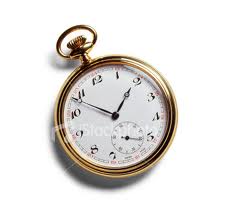
In the bedroom we have two small electronic alarm clocks (when we had a queen size bed we had a clock each on bedside cabinets.  Now we have twin beds the two clocks sit on the cabinet between the two beds.  It's easy to stretch out in the night, grab our own clock to check the time).   Also of course are our two watches plus two of my watches with flat batteries and two of MOH's with flat batteries.  I also have dad's old pocket watch and MOH has one an elderly gentleman gave him when he was a teenager.  That then is 10 timepieces in our bedroom.
In the spare bedroom both the VCR and old TV have clocks but are now unplugged as we don't use them.  Also in there is an old chiming clock that belonged to my mum.  It needs someone to get it going again....one day I hope.  So 3 time telling items in there.  We are seldom in there so don't need a clock in there.  Out here I have the time on my computer and also my airconditioner remote so 2 in here as well.  

I make that a total of 20 timepieces that are capable of telling us the time if they were in good condition (i.e. had batteries or were turned on).  All in all it would seem we actually have 11 that DO tell us the time if we need it.

Last week my watch battery died and I was so lost without it for the first couple of days but then I suddenly found myself just depending on clocks in the house or even guessing the time quite accurately.  I now have a new battery and am back to using my watch and not really using any of the clocks very much (except my bedside clock should I wake in the night).

We now only have one usable TV and/or DVD player so no duplication there.  We have only one microwave and one car and one cat.  I am beginning to feel that in this modern world we are way behind as, apart from time pieces, we don't have many duplicated items.

Friday, August 16, 2013

F is for FREMANTLE


The above is an aerial view of Fremantle and its harbour with the Swan River wending its way towards Perth and beyond.  (Our home is 4.9km south-east of Fremantle; about a 5-8 minute drive.....depending on the traffic).

To quote Wikipedia, Fremantle is a city in Western Australia, located at the mouth of the Swan River. Fremantle harbour serves as the port of Perth, the state capital.  Fremantle was the first area settled on the west coast by the Swan River colonists in 1829.  It was declared a city in 1929, and has a population of approximately 25,000.

Statue of engineer C.Y. O'Connor who designed Fremantle harbour:


The city is named after Captain Charles Howe Fremantle, the English naval officer who had pronounced possession of Western Australia and established a camp on the site. The city contains well-preserved 19th century buildings and other heritage features.  The Western Australian vernacular diminutive for Fremantle is FREO.  The Roundhouse was the first prison in Fremantle:


Fremantle railway station:

Some well cared for heritage buildings in High Street:


Fremantle lies on a series of limestone hills known by the Nyungar people as "Booyeembara"; the sandplain to the east is "Gardoo".  The original vegetation of the area was mainly Xanthorrhoea and eucalyptus trees, which were traditionally 'fired' annually by the Aboriginal people.

Note:  Xanthorrhoea were previously called 'blackboys' but as some found the name offensive they are now known as grass trees.  We older folk still tend to refer to them as blackboys and mean no offence to anyone.  This is Xanthorroea australis:


The area was considered as a site for possible British settlement in 1827, when Captain James Stirling, in HMS Success, explored the coastal areas near the Swan River.  His favourable report was welcomed by the British Government, who had for some time been suspicious of French colonial intentions towards the western portion of Australia.  As a result of Stirling's report, Captain Charles Howe Fremantle of HM Challenger, a 603 ton, 28-gun frigate, was instructed to sail to the west coast of Australia to establish a settlement there.

On 2nd May, 1829, Captain Fremantle hoisted the Union Flag in a bay near what is now known as Arthur Head, and in accordance with his instructions, took formal possession "of the whole of the West Coast of New Holland" in the name of George IV of the United Kingdom.  (Remember 2 years earlier in 1827 a similar event took place on the south coast of Western Australia where Albany now stands).

The first convicts (possibly more about our W.A. convicts in a later post) arrived at Fremantle on 1st June, 1850 aboard the "Scindian".  The thirty-seventh and last convict ship to dock at Fremantle was the "Hougoumont" on 10th January, 1868 signalling the end of penal transportation to Australia.

During World War II Fremantle was the home of the largest base for Allied submarines in the Southern Hemisphere.  There were up to 125 US, 31 British and 11 Free Dutch submarines operating out of Fremantle, until the Americans moved forward to the Philippines.

Australian Rules football is a very popular game in Western Australia, as it is in most Australian states, and there were 8 football teams competed each week during the winter months (they still do but now there are also AFL teams in each state that compete nationally).  John Gerovich, who played for South Fremantle, was well known for his high marking of the ball and this statue of his spectacular mark in the 1956 preliminary final has been commemorated in bronze.  It stands in front the 1890's Victoria Pavillion in the Fremantle football oval.


The Fremantle Maritime Museum is one of the more modern buildings in Fremantle and attracts many visitors year round:


Locals and visitors travel to the Fremantle Fishing Boat Harbour for delicious seafood:


You will often find buskers making music in the mall and here in the Fremantle Markets two locals make music with their didgeridoos:


River also supplied some wonderful photographs of Fremantle she took when over here in Western Australia visiting her brother recently.

Thursday, August 15, 2013

IT'S HARD BEING AN ELEPHANT!!

Now I imagine you are wondering what made me use that as a heading.  After I had written about our Carnarvon holiday I was thinking back on it and I remembered something that happened while there.

The four of us (MOH, our two children and me) were sitting having morning tea or some such in our tent and listening to the radio.  It was tuned to the ABC and there was a children's programme on that had us quite intrigued as it was quite funny.  There was this lady presenter talking to who was obviously an adult male, but he was pretending to be a child.

I don't even remember exactly what it was all about but he was obviously having problems with some task he'd been set and he suddenly said "Oh, it's hard being an elephant, Mrs Ward!".  He sounded quite exasperated.

For some reason this struck us all as being just so funny and even to this day it has become an expression we still use to each other in times of difficulty.  A real family phrase that we had picked up over 40 years ago.

Have you ever experienced something similar that has become part of your or your family's life?


Wednesday, August 14, 2013

D is for DUNSBOROUGH

Wikepedia tells us that DUNSBOROUGH is a coastal town in the South West of Western Australia, 254 kilometres (158 miles) south of Perth on the shores of Geographe Bay.  It is a popular tourist destination for Western Australians and has in the past been voted the State's best tourist destination.

Many years ago we had several wonderful holidays when we rented an old holiday house (similar to the one shown below) right on the shore, with our 3 eldest granddaughters and on one occasion I holidayed there with my daughter-in-law and her 2 year old daughter.  All were fun times.


In those days Dunsborough was a much less sophisticated town but since that time it has developed and become much more affluent.   It is very popular with 'schoolies' each year as is Rottnest Island.

MOH and I camped at the Mandalay Caravan Park several times (our tent was similar to this one):


and and on one occasion stayed in one of their comfortable chalets:


Dunsborough is named after the nearby Dunn Bay, which was named after Captain Richard Dalling Dunn under whom Governor James Stirling had served in the "Hibernia" and the "Armide" in 1810-11. Land for a townsite was set aside in the late 1830s, and there is a recorded whale fishery at "Dunsbro" in 1850.  When the town first appeared on a map in 1839 it was spelt "Dunnsbro" but the extra "n" seems to have disappeared by 1850, and the spelling of "bro" amended to "borough" when the name was gazetted in 1879.

There are many sights to be seen around Dunsborough and places of interest to visit.  There are walk trails through the beautiful countryside and accommodation of all types is available.

Unfortunately I was unable to find many photographs of the area but I managed a few so will share them here: (thanks to the westernaustralia-travellersguide.com and Australian Explorer)

Castle Rock:

Coastline near Dunsborough:


Fishing off the rocks:


A scenic stroll along the ocean front:


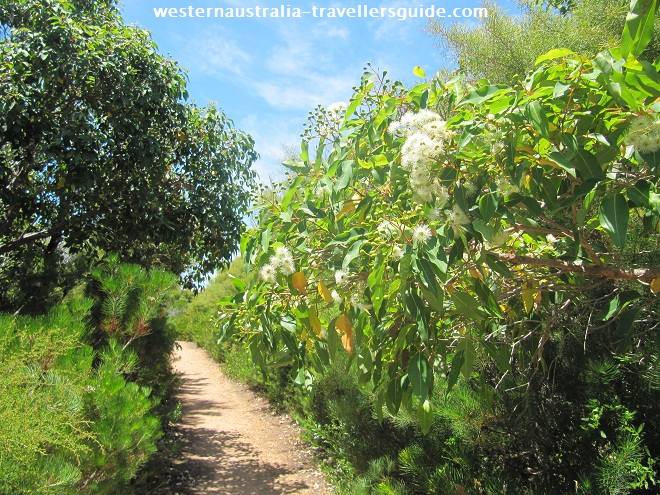
The Meelup trail has a lot to offer:


Cape Naturaliste lighthouse, only 13km from Dunsborough:


The lightbouse received an award of excellence recently:


When you round the corner from the lighthouse there are are beautiful views of the western coastline of W.A:


I know we will not holiday at Dunsborough again but it has so many happy memories of the holidays we had there over the years.  Our granddaughters still often talk about the great times they enjoyed holidaying with us all those years ago.

Tuesday, August 13, 2013

E is for ESPERANCE

Esperance is another place where MOH and I spent a wonderful holiday at a very comfortable motel on the outskirts of town.   We used our travel vouchers and did the return journey by tourist bus which was very comfortable.  If driving from Perth to Esperance many people make an overnight stop along the way as it is a very long drive to do in one day.  Not having a car with us we enjoyed several bus tours to different areas around Esperance.


According to Wikipedia ESPERANCE is a regional city in the Goldfields-Esperance region of Western Australia, on the Southern Ocean approximately 720 kilometres (450 miles) east-southeast of Perth. The 1911 census showed Esperance to be home to 9,919 people.  Its major industries re tourism, agriculture and fishing.  The entire Shire of Esperance is home to 13,477 people.


European history dates back to 1627 when the Dutch vessel "Guiden Zeepaert" skippered by Francois Thijssen, passed through the blue waters off the Esperance coast.  French explorers are credited with making the first landfall near the present day town, naming it and other local landmarks whilst sheltering from a storm in this area in 1792,  The town itself was named after the French ship "Esperance", commanded by Bruni d"Entrecasteaux.  Esperance, roughly translated, is French for 'hope'.

In 1802 British navigator Matthew Flinders sailed the Bay of Isles, discovering and naming places such as Lucky Bay and Thistle Cove.  Whalers, sealers, and pirates followed, as did pastoralists and miners, keen to exploit the free land and cash in on the gold boom in the goldfields to the north.

The area of the Esperance townsite was first settled by the Dempsters, a pioneer family of Scottish descent, in the 1870s.  A telegraph station was opened in 1876, although the formal gazettal of hte townsite did not occur until 1893.  The town jetty was also built through the 1890s following the discovery of gold in the eastern goldfields region.

The population of the town in 1898 was 985 (623 males and 362 females).

About 3 kilometres west of Esperance is the Pink Lake.  It is not always pink in colour but the distinctive colour of the water changes as a result of green alga Dunaliella salina, halobacterium Halobacteria cutirubrum, and/or high concentration of brine prawn.  Once the lake water reaches a salinity level greater than that of sea water. the temperature is high enough and adequate light conditions are provided; the alga begins to accumulate the red pigment beta carotene.  The pink halobacteria grow in the salt crust at the bottom of the lake and the colour of the lake is a result of the balance between D. salina and H. cultirubrum.  The lake has been identified as an Important Bird Area because it supports siginficant numbers of Hooded Plovers and sometimes over 1% of the world population of Banded Stilts.


There is a lot to see and do in and around Esperance so do scroll down and enjoy with me some of the delightful scenery:


I was thinking back to days when I used to go the local picture theatre each week (with mum and dad) and "Travel Talks" would be on and invariably it would end with the words "As the sun sinks slowly in the west".  Well here is that same sun sinking slowly over the west over Esperance.

I don't think I've ever heard anyone who has paid Esperance a visit give it anything other than praise.  It is certainly very, very beautiful.  I just realised I haven't as yet posted Dunsborough.  This old head not thinking straight today!  Of course I knew D came before E.

Monday, August 12, 2013

OUTBACK AUSTRALIA

When I did a post about the Isle of Skye I commented on the fantastic scenery.  I then began to think of our own Australian scenery, especially that in what is called the outback.  I have not seen these places myself but I found some great pictures (free) so thought I'd share them with you.  I don't know what or where all the places are but I find it sufficient just to enjoy them (I hope you will too).

I think most people everywhere would recognise Ayer's Rock (it is in the southern part of the Northern Territory):


This is beautiful Katherine Gorge in the far north of Western Australia:


and Wave Rock in Hyden, Western Australia:


Of course when you are on those roads in the outback you always have to wary of emus, camels and kangaroos:


and the Royal Flying Doctor sometimes has to land in unexpected places (including roads):


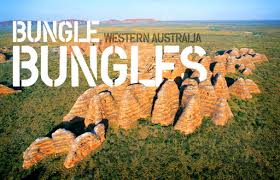
These are pictures of the Bungle Bungles in far north Western Australia (courtesy of Bungle Bungle Safari Tours):


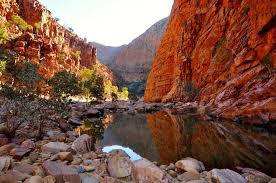
I have no idea where the following places are but I added them as they are quite spectacular and worth a peek:


I know this is the Olgas in Central Australia:


I have only been as far north as Carnarvon in our state (see previous post); have travelled throughout our very beautiful south-west and also visited Melbourne and Sydney.  I often regret that I've not seen more of my own country but instead decided to visit New Zealand (twice) and have never regretted doing so.  Now I enjoy Australia from the wonderful pictures that are available on the internet.